
Three photos sit open on the kitchen table. One is a bright portrait with a clear smile. Another catches the recipient mid-laugh, with a coffee cup in hand and an inside joke in the background. The third is part of a family story that stretches across twenty years and cannot be explained by one frame.
All three could become thoughtful gifts. They should not become the same gift.
The strongest photo gift ideas do more than place an image on an object. They match the size of the story, the habits of the recipient, and the place the finished piece will occupy. Before choosing a book, frame, keychain, calendar, or handcrafted keepsake, decide how this memory should enter the recipient's life.
✦ Decide Where the Memory Will Live
Start with a destination, not a product catalog. Where will the recipient naturally encounter the memory after the wrapping is gone?
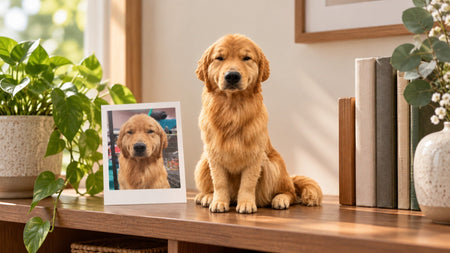
A display gift belongs on a wall, desk, shelf, mantel, or bedside table. It works best for someone who already keeps photographs or meaningful objects in view. A framed print preserves the original image exactly. A custom figurine gives the pose, clothing, expression, or pet a physical presence in the room.
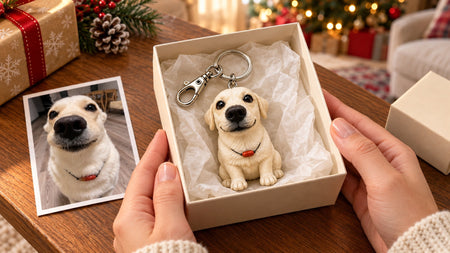
A portable gift belongs on keys, a bag, in a wallet, or beside a phone. It suits someone who prefers a private reminder or has limited display space. A locket keeps the photograph hidden until opened. A wallet print stays simple. A custom figurine keychain turns one recognizable subject into a small keepsake that can travel with the recipient.
A useful photo gift joins a routine that already exists. Calendars suit people who plan on paper. Magnets fit an active family refrigerator. A photo mug only makes sense for someone who reaches for the same cup every morning. A puzzle works when the recipient enjoys puzzles, not simply because a photograph can be printed on one.
Use three recipient-fit questions:
- Do they already display, carry, or use personal photographs?
- Would they enjoy this image being visible to other people?
- Can you name the place or routine where the gift will belong?
If the third answer is unclear, reconsider the format. Personalization does not create usefulness by itself.
◇ Match the Photo Count to the Format
The next decision is not which product looks most impressive. It is how many images the memory needs.
One strong portrait can lose impact when surrounded by filler. A family history can feel incomplete when reduced to one face. Count the photographs that genuinely move the story forward, then choose a format with enough room for them.
| What the memory needs | Best-fit format family | Why it fits | Check before ordering |
|---|---|---|---|
| One clear face, pose, or relationship moment | Framed print, portrait, relief artwork, or figurine | Keeps attention on one recognizable subject | Will the recipient display it, and is the subject clear enough? |
| One playful or private detail | Keychain, magnet, locket, wallet print, or small keepsake | Keeps the memory close without requiring wall space | Will the important detail remain readable at a small size? |
| A sequence of 6 to 20 photos | Photo book, calendar, accordion album, or story box | Gives the story a beginning, middle, and end | Do the images form a sequence rather than a random collection? |
| A large event or family chapter | Album, large print, gallery grouping, or supported group keepsake | Preserves both the people and the wider context | Are the faces large enough, and can the maker support the group size? |
| An old or irreplaceable print | A careful scan used for a book, frame, portrait, or keepsake | Makes the image shareable while protecting the original | Have you preserved the original without cutting, gluing, or altering it? |
A one-photo gift asks the image to carry the emotional weight alone. Look for a clear focal point and one detail the recipient will recognize immediately. That might be a graduation gown, a familiar jacket, a dog's uneven ears, or the way two people stand together.
A multi-photo gift needs editing. Ten photographs from one trip can tell a story. Ten nearly identical selfies can feel like storage. Remove images that repeat the same information, then arrange what remains around a place, year, relationship, or change over time.

No row in the table is a ranking. The correct format is the smallest one that can hold the whole story without asking the recipient to make room for something they did not want.
♡ Choose by Everyday Use
Once you know the destination and photo count, compare formats by how the recipient will interact with them.
For a desk, shelf, or mantel
A frame is the most literal choice. It preserves the composition the photographer captured and suits a recipient who already displays pictures. Check the frame style, available surface, and orientation before ordering. A large horizontal family photograph may not translate naturally into a small vertical tabletop frame.
A photo block or relief portrait adds depth while keeping the image recognizable as a picture. A commissioned painting introduces more interpretation. Ask whether the recipient would prefer realistic detail, a stylized portrait, or a direct print.
A handcrafted figurine is suited to a moment where physical details matter: the posture of a graduate, the clothing from a wedding, a family arrangement, a pet beside its owner, or an expression associated with a particular day. It is not a replacement for photographic accuracy. It is a different way to preserve the subject as an object that can be viewed from more than one angle.
If the original photograph is rare or fragile, display a copy rather than the original. The National Archives guidance on displaying family photographs explains that light exposure can damage originals and recommends using good-quality copies for display.
For a bag, keys, or private daily carry
Portable formats reduce the need for wall or shelf space. They can also feel less formal than a framed portrait.
A locket works for a private image that the recipient may not want constantly visible. A wallet print is easy to replace and does not impose a particular decorative style. A phone case gives the photograph maximum daily visibility, which is ideal only when the recipient would choose that image for themselves.
A figurine keychain works best with one dominant person or pet, a clear silhouette, and fewer background details. At a small scale, a recognizable hairstyle, outfit color, pose, or accessory often contributes more than a complicated setting.
Consider the attachment point as part of the gift. A keychain used on a crowded keyring faces different wear from a charm clipped to a camera bag or backpack. The recipient's routine should determine where it goes.
For a routine they already have
Useful formats should support an existing behavior. A calendar can hold twelve different moments and return to the recipient each month. A magnet can keep a face close to grocery lists, postcards, and school reminders. A notebook can connect a photograph to writing, planning, or sketching.
Mugs, blankets, puzzles, and similar products can be excellent when the recipient already uses and enjoys them. They become weak choices when usefulness is used as an excuse to ignore taste. A large photo blanket may suit a playful family room. The same image may feel intrusive in a minimalist home.
A photo gift earns its place when the format already makes sense in the recipient's life.
Display it or take it with you
Choose whether the memory belongs on a shelf or travels with them every day.
Create a Display Keepsake Create a Photo Keychain❖ Choose the Photo Before the Product
Do not start by forcing a favorite image into the first format you find. Different gifts need different kinds of visual information.
For a print, resolution and crop are central. The subject should remain sharp at the final size, and the important parts of the image should not sit too close to an edge that may be trimmed. A wide group photograph needs enough room for every face.
For a small portable gift, simplify. One person, one pet, or one clear relationship usually reads better than a crowded event scene. Check what will still be visible when the final object is only a few inches tall.
For a sculptural keepsake, look beyond the face. The maker needs enough information to understand body position, clothing, hairstyle, accessories, and the relationship between subjects. If the main photograph hides the shoes or the back of an outfit, a second reference image can clarify those details.
Technical perfection is not the only consideration. A studio portrait can be sharp but emotionally generic. A slightly less polished photograph may preserve the smile, jacket, bouquet, uniform, or pet that makes the moment specific. The image still needs enough light and detail for the chosen process.
Use this quick check:
- Can you recognize the subject without an explanation?
- Are the face, hair, clothing, and important accessories visible?
- Is the background helping the story or competing with it?
- Will the focal point survive the final size and crop?
- Does the recipient like the way they look in this photograph?
For an old print, make a careful digital copy and keep the original. The National Archives digitization guide recommends retaining originals because digital files carry their own loss risks. The Library of Congress photograph care guide also advises careful handling, clean conditions, and avoiding adhesives on photographs.
▹ Check What the Maker Will Change
Two products can begin with the same photograph and produce very different results. Before ordering, identify how much interpretation the process requires.
First, ask what happens to the background. A print service may crop it. A portrait artist may simplify it. A figurine maker may remove it and use the people, pose, clothing, or pet as the subject. If the setting carries part of the memory, confirm whether it can be represented or whether another format would preserve it better.
Second, ask what can be reviewed. A simple print preview may show placement and crop. A commissioned piece may offer a sketch or digital proof. A customized keepsake may provide a dimensional preview. Do not assume that every seller includes revisions or that physical production waits for approval.
Third, check the practical details:
- Can colors, outfits, names, text, and accessories be corrected?
- Which material and finish will be used?
- Is the final item meant for display, handling, or daily carry?
- When does physical production begin?
- How long do crafting and shipping take separately?
- Does the item arrive ready to give?
Read the preview at the same scale as the final object when possible. A tiny spelling error, missing clasp, incorrect sleeve, or altered pet marking may be easy to overlook on a large screen and obvious in the finished gift.
The goal is not to eliminate all interpretation. It is to understand which parts of the photograph will remain literal and which parts the maker must translate.
✓ Turn One Clear Photo Into a DoDoWish Keepsake
DoDoWish offers two different homes for one clear subject. A custom figurine from a photo is made for a desk, bookshelf, mantel, or side table. A custom figurine keychain is made to move with keys, a purse, or a backpack.
Both formats begin with recognition. The source photo guides the expression, hairstyle, outfit, pose, and accessories. If a pet is included, its face, markings, body shape, and scale relative to the person need to be visible.
The displayable figurine has the solid weight of artisan resin and a smooth, fade-resistant finish. Hand-painted brushwork follows small clothing, hair, and facial details. The keychain compresses that idea into a portable object, so the subject needs a simpler silhouette and details that remain legible at a smaller scale.

Preview Before Physical Crafting
DoDoWish provides a 3D digital preview before physical crafting begins. Review the composition first, then move from large details to small ones:
- Confirm the number of people or pets and their relative size.
- Check the overall pose and silhouette.
- Review the face, hairstyle, clothing colors, and accessories.
- Inspect pet markings and the way subjects connect to the base or keychain hardware.
- Request focused revisions before approval.
Extra reference photos are useful when they explain a hidden detail. They should clarify the main image, not introduce a different expression, outfit, or pose without instructions.
Plan the gift around the real production calendar. DoDoWish crafting takes 10 to 15 business days. Shipping takes another 7 to 10 business days. Leave time for preview review and revisions rather than approving an incorrect detail to meet a date.
The result should feel specific when held: the familiar jacket rendered in resin, the hair shape outlined from the side, the pet sitting at the correct height, and hand-painted color placed where the recipient expects to see it.
⌂ Pick the Format They Will Keep
Return to the three photographs on the table. The clear portrait may belong on a shelf. The private joke may work best on a keychain. The twenty-year family story may need a book.
Choose where the memory will live. Decide how many photographs the story needs. Then select the format that suits both the image and the recipient. That process produces a shorter shopping list, but a much stronger gift.
Make one photograph tangible
Turn the photo they recognize instantly into a handcrafted DoDoWish keepsake.
Start Your Custom Figurine- Displayable figurines and portable keychains created from customer photos
- Solid artisan resin with hand-painted clothing, hair, and facial details
- 3D digital preview with revisions before physical crafting
- 10 to 15 business days crafting, followed by 7 to 10 business days shipping
Frequently Asked Questions
What are some good photo gifts?
Good photo gifts fit the number of images, the recipient's habits, and the place the gift will live. Useful options include photo books, frames, calendars, lockets, keychains, magnets, portraits, and handcrafted figurines.
How do I turn a photo into a gift?
Choose a recognizable image, decide whether the memory should be displayed, carried, or used, then select a format that suits the photo count and final size. Check crop, customization, preview, revision, production, and delivery details before ordering.
What photo gift works with only one picture?
One clear picture can work well as a framed print, portrait, photo block, locket, wallet print, keychain, magnet, or handcrafted figurine. Choose a format that keeps the main face, pose, or meaningful detail easy to recognize.
What is the best photo gift for a collection of pictures?
A photo book, album, calendar, gallery grouping, or story box gives multiple images enough room to form a sequence. Remove repetitive pictures and organize the remaining images around a trip, year, family chapter, relationship, or milestone.
What kind of photo works best for a personalized gift?
Use a clear, well-lit photo with a recognizable expression and visible hair, clothing, pose, accessories, or pet markings. The subject should remain readable at the intended size, with enough space for any required crop.
Can I use an old printed photograph for a custom gift?
Yes. Make a careful digital scan or copy and use that file for the gift. Keep the original photograph, handle it carefully, and avoid cutting, gluing, or permanently altering an irreplaceable print.
What photo gift works for someone who does not display pictures?
Consider a private or portable format such as a locket, wallet print, keychain, or another object they already use. If they do not enjoy personal images on belongings either, choose a different gift instead of forcing a photo format.
How far in advance should I order a custom photo keepsake?
For a DoDoWish custom keepsake, allow approximately four weeks when possible. Crafting takes 10 to 15 business days, followed by 7 to 10 business days for shipping. Additional time lets you review the digital preview and request revisions before approval.