
Maya is sitting at the kitchen table with three photos of Finn, her red-apricot poodle, spread in front of her. The first captures his crooked smile. The second shows the slightly darker curls along his ears. The third is the only one where his full seated posture and tail are visible.
None of the photos tells the whole story by itself.
That is normal. Ordering a DoDoWish custom pet figurine is not about finding one flawless portrait. It is about choosing one primary photo for the pose, then using supporting views to show the details that make one dog different from every other dog.
✦ Picture the Finished Figurine First
Before selecting photos, decide what the finished figurine should preserve. Is your dog usually remembered sitting with one ear raised? Do you want the alert expression seen before a walk, or the relaxed face they make beside the sofa? The answer determines which image should lead the order.
The primary photo should control the pose and overall expression. If one image shows a sit, another shows a play bow, and a third shows the dog lying down, do not ask the artist to combine all three without a clear priority. Choose the moment that feels most characteristic.
Also think about where the figurine will live. A compact desk keepsake needs a readable silhouette at close range. A larger shelf display can make coat texture, facial markings, and accessories easier to notice. DoDoWish currently offers 5 cm, 6 cm, 8 cm, and 10 cm options, so the display context can guide the size after the pose is settled.
This decision gives every photo a job. One establishes the figure. The others supply evidence.
◇ Choose One Primary Photo
A useful primary photo shows the dog's face, body position, and overall silhouette clearly. Bright, even light is more informative than deep indoor shadow. A natural eye-level view usually preserves the relationship between the muzzle, ears, chest, legs, and paws better than a steep photo taken from above.
The American Kennel Club's dog photography guidance recommends working in comfortable surroundings, watching for natural expressions, using soft natural light, and focusing on the dog's eye. Those same qualities make a reference photo easier to interpret.
Look for a frame in which the eyes are sharp and the nose is not distorted by an extremely close wide-angle camera. Avoid strong filters that alter coat color. If the paws, tail, or ear tips matter to the chosen pose, make sure they are not cropped out.
Do not reject a meaningful photo simply because the background is untidy. The dog matters more than the room. Clear structure, honest color, and a familiar expression are the priorities.

✓ Check These Seven Dog Details
Once the primary pose is chosen, inspect the following seven details across the full reference set. Check them again when the digital preview arrives.
1. Face and muzzle shape
Start with the head because small proportion changes can alter the whole likeness. Compare the muzzle length and width, cheek shape, nose size, and the transition from forehead to snout. A greyhound, pug, terrier, and poodle do not carry the same facial structure, even when the final piece uses warm chibi proportions.
If your dog has a beard, pale senior muzzle, underbite, or slightly off-center nose marking, include a close photo that shows it. These features often carry more identity than a decorative accessory.
2. Ear set and silhouette
Ears shape the outline of the head. Record whether they stand upright, fold forward, fall beside the cheeks, or sit differently from one another. One half-raised ear can be the detail friends recognize before they notice coat color.
Use both front and side views when the ear structure is unclear. If the primary photo caught an unusual gust of wind, say whether that temporary position should appear in the finished figure.
3. Eyes and expression
Eye color can matter, but expression is usually a combination of several cues: eyelid shape, brow position, head tilt, open or closed mouth, and tongue position. A dog can look alert, patient, mischievous, or sleepy without any single feature creating that impression alone.
Adobe's pet photography guide emphasizes observing an animal's behavior and adapting to its personality. Apply the same idea when choosing references. Select the expression people see in everyday life, not simply the most formal portrait.
4. Coat color and distinctive markings
List the markings that function like a map: a blaze between the eyes, one white sock, a dark saddle, chest patch, speckles, eyebrow spots, or a color boundary around the muzzle. Show where each marking begins and ends.
Color can shift under warm lamps, cool shade, and phone filters. When two photos disagree, identify the one with the most accurate color. For multi-colored dogs, a side or rear view can prevent a hidden patch from being guessed.
5. Body proportions, legs, and paws
A face close-up cannot explain whether a dog has a long torso, deep chest, short legs, narrow waist, broad stance, or oversized paws. Include at least one clear full-body image that shows the relationship between the head and body.
For dogs with a dense coat, note whether the apparent width comes from fur or body structure. If a recent haircut changes the silhouette, tell the artist which coat length the figurine should follow.
6. Tail shape and carriage
The primary photo may hide the tail behind the body. Add a side or rear view showing whether it curls over the back, hangs straight, forms a plume, or rests close to the floor. Tail carriage also changes with mood, so choose the position that belongs with the selected pose.
Do not treat the tail as a minor afterthought. On a full-body figurine, it can determine the balance and recognition of the entire silhouette.
7. Collar, accessory, or characteristic pose
A collar, tag, bandana, favorite toy, or familiar head tilt can add context, but it should support the dog's identity rather than cover it. Choose one defining addition and provide a view where its color, shape, and placement are visible.
If an accessory appears in only one reference, state whether it should be included. If you want the dog without a collar, say so even when every available photo shows one.
Have the pose and seven details ready?
Upload your primary photo and supporting views for a handcrafted dog figurine with a preview before physical crafting.
Create Your Dog Figurine▹ Add Supporting Views Carefully
Supporting photos should answer questions left by the primary image. They should not introduce several competing versions of the dog.
A three-quarter or front view clarifies the eyes, muzzle, and facial markings. A side view shows muzzle length, back line, chest depth, and tail. A full-body view reveals stance and proportions. A close-up is useful only when it resolves a specific marking, collar detail, or texture.
Nikon's pet photography tips are a useful reminder that position, focus, and viewpoint change what a photograph communicates. For an order, variety is helpful when each angle supplies different evidence.
Watch for contradictions. Photos taken years apart may show different coat color, weight, haircuts, collars, or age-related features. That does not make them unusable. Add a short note explaining which version should lead.
For example: Use Photo 1 for the seated pose, Photo 2 for the left-side marking, and Photo 3 for the current collar. Do not include the winter haircut from Photo 2.
DoDoWish allows customers to provide multiple photo options. A concise, consistent set is more useful than a large unfiltered gallery.

❖ Write Notes an Artisan Can Use
Good customization notes identify the feature, its location, and the photo that shows it best. Instead of writing Make it look exactly like him, write Keep the left ear slightly folded, as shown in Photo 2.
Prioritize two or three traits that carry the likeness. The artisan still reviews the full set, but a short priority list prevents the most meaningful details from being treated like background information.
Useful notes might include:
The white chest patch stops above the front legs.Use the darker brown from Photo 3 for the ears.Keep the mouth closed, but preserve the slight head tilt.Include the blue collar, without the hanging tag.
Do not use notes to request details that no photo supports. If a hidden marking matters, take another reference image when possible. Clear evidence is more reliable than a long description.
A useful customization note identifies the feature, its location, and the reference photo that shows it best.
♡ Review the Preview in Order
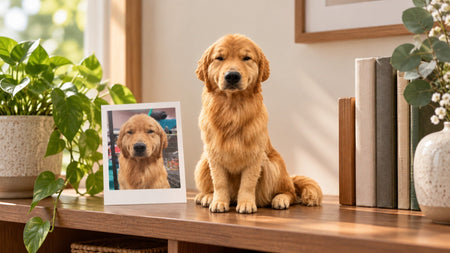
DoDoWish provides a digital model preview before physical crafting begins. This is the point to compare the proposed figure with the primary photo and every supporting view. Revisions can be requested before approval, so review structure before paint-level details.
Use this sequence:
- Check the overall silhouette and chosen pose.
- Compare the head-to-body proportions.
- Inspect the muzzle, ears, legs, paws, and tail.
- Check coat colors and the placement of distinctive markings.
- Confirm the collar, accessory, expression, and smaller finishing details.
If the head is too narrow, correct that before discussing a small chest spot. If the tail is missing from the silhouette, resolve it before fine-tuning eye color. Large structural choices affect every later detail.
View the preview beside the source photos rather than relying on memory. Zoom in, but also reduce it to the approximate size at which the finished figurine will be displayed. A feature can look clear on a large screen and become less readable at miniature scale.
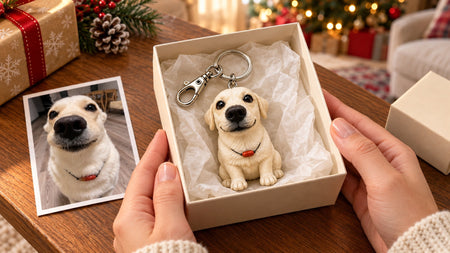
After approval, Master Artisans refine the form and apply the hand-painted coat colors, markings, facial details, and accessories. Solid artisan resin gives the finished figure noticeable weight in the hand, while the matte, fade-resistant finish keeps the brushwork readable without a glossy toy-like surface.
⌂ Choose Size and Plan the Timing
The available sizes are 5 cm, 6 cm, 8 cm, and 10 cm. Choose 5 cm for a compact desk or bedside detail. The 6 cm option is currently marked BEST SELLER and offers a balanced footprint. An 8 cm or 10 cm figure can give a complex coat pattern or full-body pose more visual presence on a shelf.
Treat size as a display decision, not a promise that every tiny feature will become equally prominent. Strong silhouette, correct proportions, and well-placed markings remain the foundations of recognition at every scale.
Crafting takes 10 to 15 business days after preview approval. Shipping usually takes another 7 to 10 business days. Add time for submitting photos, reviewing the preview, and requesting any revisions before approval.
For a birthday, Gotcha Day, holiday, or planned gift exchange, work backward from the date instead of ordering at the last moment. The DoDoWish figurine collection can also help you compare display formats before committing to the final size.
Gift-ready packaging protects the piece in transit and makes it easier to present. When the box opens, the first impression should come from the familiar ears, expression, coat map, and posture, not from a generic breed outline.
✦ Make the Figure Recognizably Yours
Return to Maya's three photos of Finn. The crooked smile belongs to the primary pose. The darker ear color comes from the second image. The full posture and tail come from the third. None of those photos was sufficient alone, but together they form a clear instruction set.
That is the real purpose of reference photos. They give a hand-sculpted, hand-painted object enough visual evidence to preserve the details a dog owner already knows by heart.
The finished keepsake does not need to reproduce every strand of fur to feel personal. It needs the right silhouette, the right expression, the right coat map, and the one posture that makes someone say the dog's name before reading a description.
Turn the photos into one familiar figure
Choose the pose, show the defining details, and review the preview before your custom dog figurine is crafted.
Start Your Custom Figurine- One primary photo establishes the pose, with supporting views clarifying hidden details
- Seven-point dog likeness checklist covering structure, markings, expression, and accessories
- Digital model preview with revisions available before physical crafting begins
- Hand-refined and hand-painted artisan resin in four display sizes
- 10 to 15 business days crafting plus 7 to 10 business days shipping
Frequently Asked Questions
How many photos should I provide for a custom dog figurine?
Provide one clear primary photo for the pose and expression, then add a small number of supporting views that show the face, side profile, full body, tail, coat markings, and any requested accessory. DoDoWish accepts multiple photo options, but a concise and consistent set is more useful than a large unfiltered gallery.
What is the best primary photo for a custom dog figurine?
The best primary photo is clear, well lit, and taken near the dog's eye level. It should show the face, intended pose, overall silhouette, and any paws, ears, or tail that need to appear in the finished figurine. Avoid heavy filters, motion blur, deep shadows, and extreme wide-angle distortion.
Can I request a specific pose, collar, or accessory?
Yes. DoDoWish follows the uploaded photos and customization notes for the pose, expression, collar, and supported accessories. Provide a clear view of the requested detail and identify which reference photo should guide it.
Will I see a preview before the dog figurine is made?
Yes. DoDoWish provides a digital model preview before physical crafting begins. Compare the preview with the primary and supporting photos, then request needed revisions before approving the design for production.
How long does a custom dog figurine take to make and ship?
After the digital preview is approved, crafting takes 10 to 15 business days. Shipping usually takes another 7 to 10 business days. Allow additional time for submitting references, reviewing the preview, and requesting revisions before approval.
What sizes are available for the DoDoWish custom pet figurine?
The DoDoWish custom pet figurine is currently available in 5 cm, 6 cm, 8 cm, and 10 cm sizes. The 6 cm option is marked BEST SELLER, while larger sizes can give a detailed full-body pose or coat pattern more visual presence on a shelf.